Man and Woman Factory Worker Profession Review
As a designer who spends more time staring at stitch simulations than actual blueprints, I approach new Illustrations with a specific set of criteria. It is not just about whether an image looks good on a screen; it is about how that image translates into thread, tension, and texture. When I first opened the Man and Woman Factory Worker Profession file, my immediate reaction was one of cautious optimism. This isn't just another generic icon; it carries a narrative weight that fits perfectly into the current trend of celebrating trade skills and industrial heritage. However, moving from a digital Graphics asset to a tangible embroidery project requires a critical eye.
First Impressions and Visual Personality
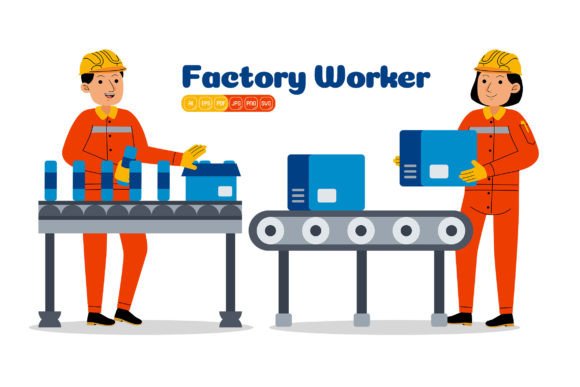
The mood of this design is grounded and professional. It avoids the trap of being overly cartoonish while maintaining enough stylization to work well in thread. The layout features two figures, likely representing a collaborative workforce, which creates a balanced composition. For an embroidery designer, the first thing to evaluate is the flow of lines. In this case, the outlines appear clean, suggesting that the transition from vector to machine embroidery design should be smooth if digitized correctly or if the provided embroidery file is high quality.
The visual personality here is sturdy. It speaks to durability, teamwork, and craftsmanship—themes that resonate deeply with customers looking for custom apparel or small shop product branding. Whether you are an Etsy seller creating items for a niche audience or a craft business owner making corporate gifts, the subject matter immediately establishes a connection. It feels less like a decoration and more like a badge of honor.
Real-World Application: The Workwear Scenario
To truly test the viability of Man and Woman Factory Worker Profession, I imagined a specific real-life scenario: a local fabrication shop ordering ten custom sweatshirt embroidery pieces for their team retreat. They wanted something that looked professional but wasn't a boring text-only logo. This design fits that brief perfectly. Placed on the left chest of a heavy cotton blend sweatshirt, the figures would serve as a unifying symbol.
Beyond corporate gear, consider the handmade product market. A tote bag design featuring these workers could appeal to union members, trade school graduates, or anyone proud of their labor. The simplicity of the concept allows it to scale. You could shrink it down for a baby embroidery item, perhaps a onesie for a "future builder," or enlarge it for a statement embroidered patch to be ironed onto a denim jacket. The versatility is its strongest asset, allowing it to bridge the gap between serious commercial embroidery and playful holiday embroidery gifts for Dad or Mom.
Navigating Fabric and Stitch Challenges
While the concept is strong, execution is where many designs fail. When working with Man and Woman Factory Worker Profession, you must be mindful of stitch density. Industrial themes often rely on solid blocks of color to represent uniforms or machinery. If the digitizing is too dense, you risk creating a stiff, cardboard-like feel on the fabric, which is uncomfortable on wearables like t-shirts or custom apparel.
Texture is another critical factor. If you plan to stitch this on a textured fabric like a waffle knit or a rough canvas tote bag, the finer details might get lost. The definition between the two figures needs to remain clear. On dark fabrics, you will need to ensure your thread colors have enough contrast. A navy uniform on a black shirt will vanish. Conversely, on light fabrics, ensure your underlay stitches don't peek through lighter thread colors.
Curved surfaces present their own hurdles. If you are applying this to a cap, the center of the design must align perfectly with the seam, and the width must fit within the available hoop size without distorting around the curve. Small details, like facial features or tools held by the figures, might need simplification if the final output is small. Always remember that what looks crisp in a printable mockup might blur slightly once the needle hits the fabric.
Enhancing Brand Value and Customer Trust
Using high-quality design assets like this directly impacts your brand consistency. For creative entrepreneurs, the professionalism of the finished product dictates customer trust. A sloppy stitch job on a great design ruins the effect, but a great design with poor construction is equally damaging. Man and Woman Factory Worker Profession offers a level of sophistication that elevates a simple garment into a piece of branded merchandise.
For Etsy listings and boutique branding, the recognition factor is key. People buy stories. This design tells a story of industry and partnership. When a customer sees this on a personalized gift, they aren't just buying a shirt; they are buying an identity. This emotional connection drives buyer engagement and can justify a higher price point for your handmade shop items.
Practical Notes for the Embroidery Designer
Before you commit to stitching this on a client's expensive garment, follow these practical steps:
- Test on Scrap Fabric: Always run a sample on the exact same material you intend to use for the final product. This reveals issues with puckering or registration.
- Check Stabilizer Requirements: Depending on the stitch density and fabric type, you may need a cut-away stabilizer for long-term durability, especially for workwear that will be washed frequently.
- Review Color Contrast: View your design in black and white mockups first. If the figures blend together without color, the design lacks structural definition.
- Verify Licensing: Since this originates as a Graphics illustration, confirm the license terms. Ensure you have the right to use it for commercial embroidery and selling physical goods.
- Inspect Small Details: Look closely at the hands and faces. In embroidery, tiny running stitches can break easily. You may need to manually adjust the digitizing to reinforce these areas.
- Confirm Hoop Size: Ensure the design fits your machine's hoop without needing to re-hoop, which can cause alignment errors.
It is important to note that while the source description mentions the ability to resize and change colors easily for infographics and web use, these attributes do not automatically transfer to embroidery. An applique design or a standard raster image cannot simply be "resized" for stitching without re-digitizing or adjusting pull compensation. Do not assume the file is ready-to-stitch unless it is explicitly sold as a digital embroidery file in formats like .PES, .DST, or .EXP. If you are converting this from a vector illustration yourself, pay close attention to stitch angles and underlay settings.
In conclusion, Man and Woman Factory Worker Profession is a robust choice for designers looking to tap into the industrial and trade aesthetic. With careful attention to fabric selection, stabilizer choice, and stitch optimization, it can become a standout element in your portfolio. Whether for a wedding gift honoring a couple in the trades or a line of boutique branding apparel, this design has the potential to perform beautifully when treated with the respect and technical precision it deserves.